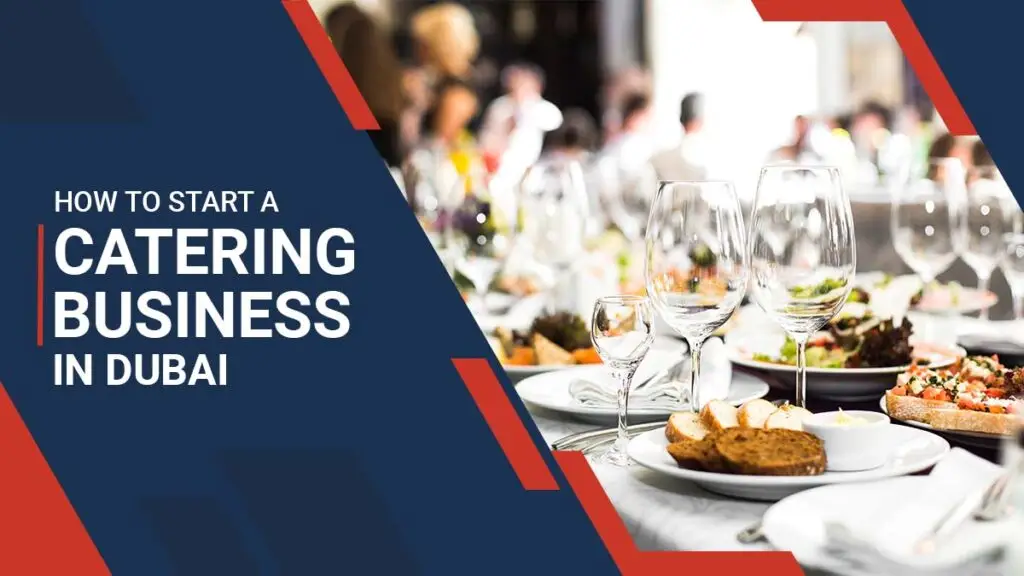
Dubai’s active social scene, strong corporate sector, and diverse population make it an attractive market for catering services. Whether you plan to offer large-scale event catering, corporate lunches, or home-based services, starting a licensed catering business in Dubai presents significant opportunities.
Navigating the setup process, including understanding licensing requirements, costs, and regulatory compliance, is the essential first step.
This guide addresses key questions, outlines how to start a catering business in Dubai, reviews startup costs, and explains legal options, including starting a home-based catering business.
If you are ready to begin, this guide provides a clear roadmap from concept to launch.
Why Choose Dubai for Starting a Catering Business in 2026
Dubai is a leading destination for catering businesses, supported by a strong economy, diverse population, and a vibrant events sector. By 2026, the UAE catering services market is valued at approximately USD 4.1–4.23 billion and is projected to grow at a CAGR of 5.8–6.2%, reaching around USD 6.25–7.01 billion by 2032–2034 (depending on the research source). Growth is driven by tourism, corporate events, institutional catering, and innovations such as cloud kitchens. Key growth drivers include tourism, corporate events, institutional demand, and innovations such as cloud kitchens.
Key reasons to choose Dubai include:
High Demand from a Diverse and Affluent Population
Dubai is home to over 200 nationalities, with expatriates making up 88% of the population. This diversity drives ongoing demand for a wide range of cuisines, from corporate lunches and weddings to private events and health-focused meals. The multicultural environment also enables specialisation in areas such as halal, vegan, or international fusion catering.
Thriving Tourism and Events Industry
Dubai is a global hub for tourism and MICE (Meetings, Incentives, Conferences, Exhibitions), attracting millions of visitors each year. Major events, festivals, and conferences generate strong demand for high-end and customised catering. The city’s luxury reputation supports premium pricing and consistent event revenue.
Strong Growth in the Food & Beverage Sector
The broader UAE foodservice market is expanding rapidly (CAGR of 11-17% in recent forecasts), with high disposable incomes and a shift toward experiential dining. Catering benefits from this, especially in institutional (labour camps, airlines) and corporate segments.
Business-Friendly Environment with Tax Advantages
- Dubai offers zero personal income tax and corporate tax advantages in many business structures.
- Most sectors allow 100% foreign ownership, eliminating the need for a local sponsor for eligible activities.
- Licensing processes are streamlined through the Department of Economy and Tourism in Dubai or through free zones, enabling faster, more cost-effective business setup.
World-Class Infrastructure and Logistics
Dubai offers excellent facilities for food storage, delivery, and operations, along with a strategic location for sourcing global ingredients. Convenient access to airports and ports ensures efficient supply chains.
Opportunities in Emerging Trends
Emerging trends such as cloud kitchens, digital ordering, and sustainable or healthy options are on the rise. Dubai’s tech-savvy market encourages innovation, enabling caterers to scale rapidly.
Stable Economy and Supportive Regulations
Dubai’s GDP is projected to grow by approximately 4.5% in 2026, with a strong emphasis on hospitality and innovation. Government initiatives improve food security and business operations, fostering a stable environment for long-term growth.
In summary, Dubai provides a high-demand market, economic stability, and favourable policies, making it an ideal location for a profitable catering business in 2026. By selecting the right niche and ensuring compliance, entrepreneurs can access steady opportunities in events, corporate services, and tourism. Focusing on quality, customisation, and digital integration will offer a competitive advantage.
How to Start a Catering Business in Dubai
The process is straightforward but requires strict adherence to food safety and business regulations. The following is a practical, current, step-by-step guide based on requirements from the Dubai Department of Economy and Tourism (DET/DED) and Dubai Municipality (DM), as well as reputable business setup sources.
Step 1: Research & Plan Your Business
- Conduct market research to identify your niche, such as weddings and events, corporate lunches, labour camp catering, healthy or vegan options, international cuisines, or cloud kitchen delivery models.
- Define your business model, whether event-based, institutional contracts, delivery-only, or a hybrid approach.
- Develop a business plan that covers your target market, menu concepts, pricing, suppliers, projected costs and revenue, and marketing strategies such as social media or partnerships with event planners.
Step 2: Choose Jurisdiction & Legal Structure
- Mainland (via DET/DED) is ideal for broad local access, government contracts, and direct client engagement throughout Dubai and the UAE. Most activities, including catering services, now allow 100% foreign ownership without a local sponsor holding shares (per 2021 reforms).
- Free Zones (such as IFZA, DWTC, or Ajman) offer easier setup, 100% foreign ownership, and potential tax benefits. However, additional approvals or local agents may be required for full mainland trading.
- Select a legal structure, typically an LLC (Limited Liability Company), Sole Establishment, or Civil Company.
Step 3: Register & Obtain Trade License
- Reserve your trade name through the DET portal (dubaidet.gov.ae).
- Submit the initial approval application, which includes a business plan outline.
- Finalise your commercial or professional trade license. The process typically takes 5 to 14 days if all documents are complete.
- Prepare key documents, including passport copies, proof of visa or residency (if applicable), a business plan, and a lease agreement or Memorandum of Understanding for the premises.
Step 4: Secure Premises & Kitchen Setup
- Lease a commercial kitchen. Dubai Municipality does not publish a strict universal minimum square meter requirement for catering kitchens.
- Cloud kitchens are a popular option due to lower costs and a focus on delivery.
- Prepare detailed layout plans that include workflow zones for preparation, cooking, storage, and washing, along with provisions for ventilation and pest control.
- Obtain a No Objection Certificate from the landlord and register the tenancy through Ejari.
Step 5: Obtain Food Safety & Dubai Municipality Approvals
- Register on the DM FoodWatch portal (foodwatch.dm.gov.ae) for digital tracking.
- Apply for a Food Establishment License or Permit, which is mandatory for any food handling or preparation.
- This requires an approved kitchen layout from a registered consultant or engineer, an equipment list, and a HACCP-based food safety plan.
- Ensure compliance with the Dubai Food Code, which covers hygiene, temperature controls, allergens, and traceability.
- Pass the DM inspection, which includes checks on hygiene, equipment, and fire safety by Civil Defence.
- If delivering food, obtain approvals for transportation vehicles, which must be insulated and temperature-controlled.
- All staff must have health cards confirming medical fitness and complete basic food hygiene training from DM-approved providers.
Step 6: Additional Permits & Registrations
- Register for VAT if your annual turnover exceeds AED 375,000.
- Obtain Chamber of Commerce membership, which is often required.
- If serving alcohol at events, obtain a separate liquor license. This is uncommon for catering-only businesses.
- Apply for staff visas if hiring, noting that quotas are based on office or kitchen space.
Step 7: Launch & Operate
- Hire and train staff, including chefs and helpers, and ensure that all possess valid health cards.
- Source suppliers approved by DM to ensure traceability.
- Build an online presence through a website, social media, and, if applicable, partnerships with delivery apps such as Talabat.
- Actively market your business by networking at events and targeting corporate clients, hotels, and wedding planners.
- Renew your trade license annually and ensure ongoing compliance with DM permits and inspections.
Need assistance? Shuraa Business Setup can help you with the licensing process, documentation, and approvals.
Required Documents for Starting a Catering Business in Dubai
To start a catering business in Dubai, you must obtain a trade license from the Department of Economy and Tourism (DET/DED) and secure food safety approval from Dubai Municipality (DM). Document requirements may vary based on your business location (mainland or free zone), scale, and type of operation.
As of 2026, here’s a comprehensive list of the required documents, compiled from official guidelines (DET, DM Food Safety Department) and standard processes:
For Trade License (DET/DED – Mainland or Free Zone)
These documents are required to register your business activity, typically under “Catering Services” (such as code 5629.98).
- Passport copies of all shareholders/owners/partners (valid, with at least 6 months validity; colour copies).
- Copies of UAE residence visas or entry permit/stamp pages. Non-residents may initially use a tourist visa, but residency is required to operate.
- Emirates ID copies (if already a resident).
- Passport-size photos with a white background for each shareholder or manager.
- Trade name reservation certificate, obtained through the DET portal.
- Initial approval certificate from DET, issued after name reservation and preliminary checks.
- Business plan or activity description, detailing catering services, target clients, and menu types.
- Notarised Memorandum of Association (MOA) or Local Service Agent agreement, required for LLCs or foreign-owned mainland businesses.
- Board resolution, if corporate shareholders are involved.
- No Objection Certificate (NOC) from the current sponsor or employer, if the applicant holds a UAE visa or is sponsored.
- Lease agreement for kitchen or office premises, along with the Ejari registration certificate, which is mandatory for mainland businesses.
For Food Safety Approval / Food Establishment License (Dubai Municipality – DM)
This approval is mandatory and must be obtained separately through the FoodWatch portal after completing the initial trade license steps. The minimum kitchen area is typically 1,000 square feet, as per DM guidelines for activity 5629002.
- Copy of approved trade license (or initial approval from DET).
- Detailed kitchen and layout plans, including architectural, mechanical, electrical, and plumbing drawings. Plans must show workflow zones, ventilation, drainage, and pest control measures, and be prepared by an approved consultant or engineer.
- List of kitchen equipment with specifications (e.g., ovens, chillers, sinks) to ensure compliance with the Dubai Food Code.
- No Objection Certificate (NOC) from the landlord or property owner, confirming permission for food operations.
- Ejari-registered tenancy contract or title deed.
- Food safety plan or HACCP-based system outline, covering traceability, temperature controls, and allergen management, as often required for approval.
- Pest control contract (with DM-approved provider).
- Staff-related documents (submitted later or during inspection): Health cards/medical fitness certificates for all food handlers; basic food hygiene training certificates (DM-approved courses).
- Civil Defence or fire safety approval for the premises, including fire NOC and equipment layout.
Additional Documents (as Applicable)
- VAT registration certificate, required if projected annual turnover exceeds AED 375,000.
- Chamber of Commerce membership is often required after obtaining the license.
- Catering service agreements/samples (for some free zones or specific permits).
- Vehicle documents, if delivery or transport is involved, including vehicle registration, insurance, and DM approval for insulated, temperature-controlled food transport vehicles.
- For free zones, such as DDA, provide an additional NOC from the zone authority, a catering service agreement, and a copy of DM approval.
Key Notes
- Most documents should be submitted through online portals: DET/eservices for trade licenses and FoodWatch for DM approvals.
- The process often includes inspections, such as DM site visits for hygiene and equipment checks.
- Consider using a business setup consultant or PRO to compile and submit documents, as this helps avoid rejections, especially with layout plans or incomplete submissions.
- Home-based catering is generally not permitted in Dubai. Full catering operations require a commercial kitchen. However, home-based businesses may prepare low-risk items, such as sweets or baked goods, if they obtain a DED home trader license and Dubai Municipality approval.
Gather all required documents early, as incomplete submissions can significantly delay the process, which typically takes four to twelve weeks. For free zone or home-based setups, or if you need cost estimates or templates, please provide additional details for tailored guidance.
Cost to Start a Catering Business in Dubai
Starting a catering business in Dubai generally requires an investment of AED 120,000 to over AED 600,000, depending on scale, location, and equipment needs. Major initial expenses include the catering license (approximately AED 22,000–25,000), commercial kitchen rent (AED 10,000–50,000+ per year), and fit-outs.
Key Cost Factors and Estimated Ranges (AED):
- Catering License & Permits: The DET/DED trade license for catering services typically ranges from AED 12,000 to 25,000, depending on factors such as the activity code, office space, visas, and required approvals. Including Dubai Municipality food establishment approval, layout assessment, initial inspections, knowledge and innovation fees, Chamber membership, and consultant fees, total licensing costs usually range from AED 30,000 to over 80,000.
- Kitchen Setup and Equipment: AED 50,000–150,000+ for commercial kitchen equipment, ventilation, and any required facility renovations.
- Rent: Annual rent for commercial kitchen space ranges from AED 10,000 to over AED 50,000.
- Staffing and Visas: AED 20,000–50,000+ for staff visas and initial salaries.
- Operating Costs: Includes marketing, insurance, initial inventory, and utility deposits.
Key Considerations:
- Mainland vs. Free Zone: Mainland licenses permit operation throughout the UAE and allow 100% foreign ownership for most activities, including catering, without a local sponsor holding shares (though a Local Service Agent agreement may apply in limited professional structures for administrative purposes only).
- Food Safety: Compliance with Dubai Municipality regulations is required to obtain the necessary No Objection Certificate (NOC).
- Business Plan: Total investment depends on whether you pursue small-scale, home-based catering (lower cost) or large-scale, industrial, or high-end event catering (higher cost).
Note: These figures are for reference only and may vary depending on your business requirements. For precise estimates, please use our cost calculator.
Common Mistakes to Avoid in Your Dubai Catering Business
Dubai’s catering market offers significant opportunities but is subject to strict regulations. Many new businesses fail by underestimating these requirements. Avoid the following key mistakes to ensure a successful launch and ongoing operations.
1. Ignoring Dubai Municipality & Food Safety Compliance
- Mistake: Submitting incomplete kitchen plans or failing to pass initial inspections.
- Result: Incurring costly delays, application rejections, or immediate business shutdowns.
- Solution: Work with an approved consultant and ensure full compliance with the Dubai Food Code from the outset.
2. Choosing the Wrong Business Structure/Jurisdiction
- Mistake: Choosing a free zone or mainland license without understanding trade area restrictions.
- Result: Inability to serve key clients, such as corporate or event customers, or encountering unexpected legal and ownership challenges.
- Solution: Clearly define your target market and select a jurisdiction that provides direct access to those clients.
3. Underestimating True Costs
- Mistake: Budgeting only for licensing and kitchen equipment.
- Result: Experiencing cash flow issues due to hidden costs such as fit-out, renewals, staff visas, health cards, and approved vehicles.
- Solution: Allocate a 20-30% financial buffer for your first year of operations.
4. Launching Without a Niche or Plan
- Mistake: Offering generic menus in a saturated market.
- Result: Difficulty attracting clients and distinguishing your brand.
- Solution: Identify a clear target audience and develop a unique selling proposition, such as vegan, sustainable, or premium corporate catering.
5. Neglecting Operations & Logistics
- Mistake: Insufficient staffing, missing health cards, or inadequate event-day planning.
- Result: Service failures, reduced food quality, and reputational damage.
- Solution: Invest in trained, certified staff and implement thorough logistics planning for transport and venue access.
6. Overlooking Digital Marketing
- Mistake: Relying exclusively on word-of-mouth referrals.
- Result: Missing growth opportunities in a digitally driven market.
- Solution: Prioritise local SEO, enhance Instagram presence, and establish partnerships with event planners from the outset.
Pro Tip: Partner with a reliable business setup consultant early to avoid these mistakes. In Dubai, prioritising compliance rather than speed is essential for long-term success.
Essential Tips for Success in Your UAE Catering Business
To succeed in Dubai’s competitive market, apply these essential strategies to achieve growth and maintain stability.
1. Prioritise Compliance and Quality
- Action: Establish a rigorous HACCP system and perform regular internal audits.
- Result: High Dubai Municipality scores foster trust and help secure repeat contracts with corporate and institutional clients.
2. Focus on a Distinct Niche
- Action: Specialise in a unique offering, such as vegan fine dining, sustainable corporate lunches, or halal fusion.
- Result: Differentiate your business and attract clients seeking tailored, premium experiences.
3. Establish Recurring Revenue Streams
- Action: Pursue long-term contracts with offices, schools, and residential communities in addition to event services.
- Result: Stabilises cash flow and provides a predictable operational base.
4. Enhance Digital Presence and Social Proof
- Action: Invest in high-quality Instagram and TikTok content, collaborate with influencers, and gather client testimonials.
- Result: Generated over 70% of new business in Dubai’s digital marketplace.
5. Optimise Logistics and On-Site Execution
- Action: Plan thoroughly for transportation, venue access, and weather contingencies.
- Result: Flawless execution turns one-time clients into loyal advocates.s.
6. Scale Strategically with Financial Discipline
- Action: Monitor margins, reinvest profits in equipment and staff, and expand only after systems are established.
- Result: Achieve sustainable growth from a strong financial foundation.
Key to Success: Consistently exceed the high expectations of a market that values luxury and perfection. Reliability and a stellar reputation are your most valuable assets.
Conclusion: Your Roadmap to a Successful Catering Venture in Dubai
Starting a catering business in Dubai offers significant potential in a dynamic market. Success depends on thorough market research, careful niche selection, and effective management of licensing, compliance, and setup.
The process requires strict adherence to Dubai’s regulatory standards, especially those set by the Dubai Municipality. Avoiding common pitfalls such as underestimating costs or neglecting digital marketing, and focusing on quality, specialisation, and operational excellence will help you establish a reputable and profitable brand.
A successful venture requires more than a strong menu; it needs a legally compliant and strategically sound business framework. Investing in proper planning and professional guidance from the start saves time, capital, and stress, allowing you to focus on delivering exceptional culinary experiences.
Ready to Turn Your Culinary Vision into a Licensed Reality?
Start Your Catering Business in the UAE with Shuraa Business Setup.
Navigating Dubai’s licensing and setup process can be complex, but you do not have to manage it alone. With 26 years of experience and a record of forming over 100,000 businesses, our experts offer in-depth knowledge of Dubai’s business environment, food safety regulations, and compliance requirements.
We support you from concept to launch with a dedicated consultant who guides you through each stage. By managing documentation, securing approvals, and ensuring regulatory compliance, we streamline the process so you can focus on creating exceptional food experiences.
Contact Shuraa Today and Take Your First Confident Step:
- Call: +971 4 408 1900
- WhatsApp: +971 50 777 5554
Let us manage the complexities while you prepare to enter the market. Contact us for a personalised consultation tailored to your catering goals and receive clear answers to your questions.
FAQs: Starting a Catering Business in Dubai
1. Is catering a profitable business in Dubai?
Catering in Dubai can be profitable, driven by strong demand from tourism, corporate events, and the luxury market. Profitability relies on selecting a niche, managing costs, and securing long-term contracts.
2. What are the main types of catering licenses in Dubai?
You may obtain a catering license from the Dubai Department of Economy and Tourism (DET) for mainland operations, allowing nationwide trade, or from a Free Zone such as DMCC or Ajman, which offers 100% foreign ownership but may limit direct access to mainland clients. A Food Establishment License from Dubai Municipality is required for all catering businesses.
3. How much does it cost to get a catering license in Dubai?
Estimated startup investment, covering kitchen fit-out, equipment, rent deposit, initial inventory, staff visas, marketing, and working capital, ranges from AED 200,000 to over AED 800,000. The amount depends largely on the scale, from a small cloud or shared kitchen to a large central kitchen for events or institutions.
4. Can I start a catering business from home in Dubai?
Home-based catering businesses are generally not allowed in Dubai. Dubai Municipality requires catering services to operate from a commercial-grade kitchen that complies with strict health and safety standards. Cloud or dark kitchen models are viable alternatives, as a dedicated commercial space is typically necessary.
- Full catering services (activity code 5629002) require a minimum of approximately 1,000 square feet of commercial space, as specified by Dubai Municipality.
- Home-based operations are limited to specific low-risk foods, such as sweets, light meals, or traditional items. These require an eTrader or home trader license, Dubai Municipality inspection, and FoodWatch registration.
5. What are the key steps to start a catering business in Dubai?
Key steps include: 1) Conduct market research and business planning, 2) Choose between mainland and free zone, 3) Reserve your trade name and obtain initial approval, 4) Secure a DM-compliant commercial kitchen, 5) Obtain a Dubai Municipality Food Establishment License, 6) Pass DM and Civil Defence inspections, and 7) Launch with appropriate staffing and marketing.
6. How long does it take to get a catering license in Dubai?
The process typically takes 4 to 12 weeks, depending on document preparation, inspection schedules, and whether you engage a consultant. Obtaining the trade license may take 5 to 14days, while Dubai Municipality approvals and kitchen setup require additional time.
7. What are the most common reasons for license application rejection?
Common reasons for application rejection include incomplete or non-compliant kitchen layout plans, failing the initial DM hygiene inspection, incorrect business activity selection, or failure to provide a valid tenancy contract (Ejari). Engaging a knowledgeable consultant can help minimise these risks.
8. Do I need a local sponsor to start a catering business in Dubai?
No. Since the 2021 amendments, which remain in effect through 2026, most mainland activities, including catering services, permit 100% foreign ownership without requiring a local partner or sponsor. In free zones, 100% foreign ownership is standard, and no Local Service Agent (LSA) is needed. On the mainland, an LSA agreement may be required only for certain professional structures, which is not typical for catering LLCs. In these cases, the LSA provides administrative support but does not hold any ownership or profit share.
9. What is the minimum kitchen size required by the Dubai Municipality?
The required size depends on the scale of operation, number of meals prepared, type of food, and layout efficiency. However, kitchens must have clearly separated zones for receiving, storage, preparation, cooking, washing, and packaging, with adequate ventilation, drainage, and pest control. In practice, most approved catering kitchens are at least 60–100 sqm (650–1,000+ sq ft), and very small operations may face rejection. Always submit layout plans for case-by-case approval via the FoodWatch portal.
10. How important is HACCP for a catering business in Dubai?
HACCP (Hazard Analysis Critical Control Point) is essential. Implementing this food safety management system is required to obtain a Dubai Municipality Food Establishment License. It is also necessary for passing inspections and securing contracts with corporate clients, hotels, and airlines.
11. Can I deliver food with a catering license, and do I need special approval?
Yes, you may deliver food, but you must obtain special approval for your delivery vehicles from Dubai Municipality. Vehicles must be insulated, temperature-controlled, and regularly inspected to ensure food safety during transport.
12. What are the ongoing renewal and compliance costs?
Annual costs include trade license renewal (approximately AED 15,000-20,000), DM permit renewal, staff visa and health card renewals, insurance, and mandatory pest control contracts. Plan for an additional 20-30% of your first-year setup costs to cover ongoing operational expenses.
13. Why should I use a business setup consultant like Shuraa?
With 26 years of UAE experience and over 100,000 businesses formed, a consultant like Shuraa provides a dedicated expert to navigate complex regulations, avoid costly mistakes, and streamline the entire process—from document preparation and license acquisition to ensuring full compliance with Dubai Municipality’s evolving standards. This saves you significant time, reduces the risk of rejection, and lets you focus on building your brand.
Disclaimer: This information is for general guidance only and may change. For the most current requirements, consult the official Dubai authorities or a qualified business setup advisor.